
People ask me this all the time. “What are your favorite herbs to grow? What are the must-haves for your garden?”
The truth is that every household is going to be different. Whether you have kids or livestock/pets makes a big difference in some of the herbs you want to have in your garden. Since I have both, I’ll tell you my top 5 herbs.
Some of the herbal remedies I reach for first are from plants or mushrooms that I forage in the wild. For this post I’m going to focus on the herbs that I would plant or grow on purpose.
This is nowhere near an exhaustive list. I probably grow at least 50-100 herbs at my farm (some are planted on purpose, others simply show up) and I work with almost all of them. But if I had to start over again (and I’m sure I will one day) these are the ones I’d either seed or get seedlings for first.

Thyme- Thyme and oregano can be worked with interchangeably, medicinally speaking. The only way I use them differently is as flavorings in food. But that’s the best part here: you can cook with thyme, but it’s also my go-to antiseptic, antibacterial, antiviral, and aromatic. I’ll put thyme in a steam to clear my sinuses if I’m sick or in any kind of wound-healing poultice to fight off a bacterial infection. And it tastes very nice in tea when you’re sick! Explore this herb further as you wish, but definitely grow it in your garden.

Comfrey- I will never purposefully go a year without making infused comfrey oil. I prefer working with the young leaves, as they’re very strong but not quite as high in pyrrolizidine alkaloids (which can cause permanent liver damage) as the roots are. I’m not concerned about hurting myself with comfrey. It’s not tasty so I don’t eat it and I’d rather not make a tea from it (again, tastes bleh) so I pretty much only work with it topically. But this stuff (either a poultice or the infused oil) has healed many of my bruises and sprained ankles. It also helps increase the healing time of broken bones! A must-have on any homestead.

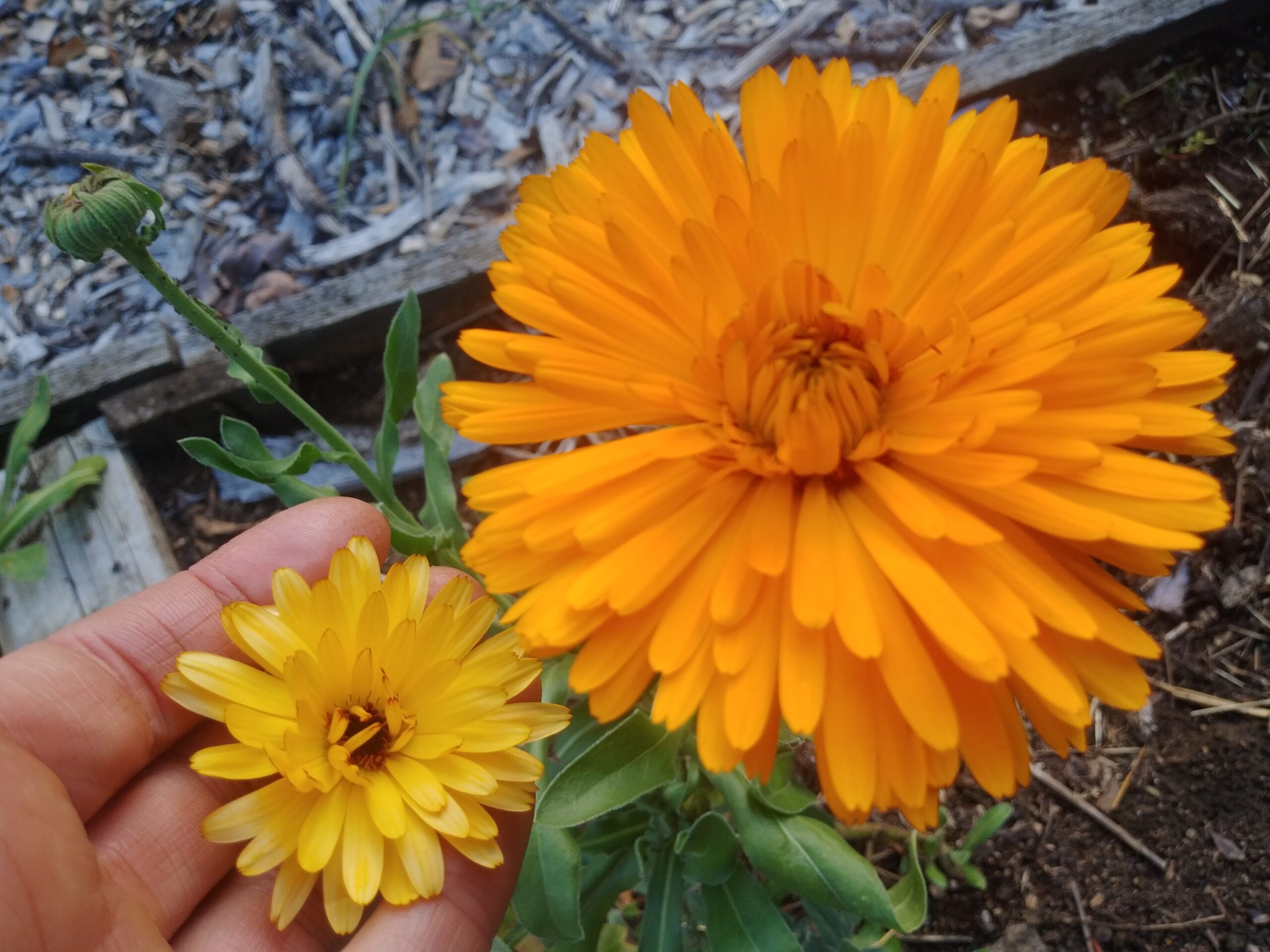
Calendula- I grow this flower on purpose every year in as large quantities as I can manage. Some years the harvest is better than others. I’ve noticed over the years that Calendula actually thrives in dry soil conditions, once it gets established. And 99% of the time it re-seeds itself every year, so I always end up with a few that I didn’t plant on purpose. The medicinal part you want to harvest on this is the entire flower head, calyx and all. The resins are concentrated at the bottom/in the calyx and that’s why your hands end up all sticky after you’ve been popping calendula heads off for awhile. That’s the good stuff! I dry the flower heads and keep a stash as long as they’ll last. I put these into my gut heal tea but they’re also a staple in most of my infused oil blends, as they soothe rashes and dry, irritated skin. It’s a lifesaver for any new parent with a baby!

St. John’s Wort- I’m never sure whether I should classify this as an herb I grow on purpose or one that I forage, because honestly I find this growing in the wild at least as much as I harvest the ones that I plant on purpose. Nonetheless, it’s become a critical plant in my herbal practice because of the dark red oil I make from infusing the fresh flowers. That oil is red gold! Not only can it heal nerve damage (I’ve relied on it multiple times when I pinched a nerve in my arm) but I recently discovered that it helps immensely in resolving my Restless Leg Syndrome at night. I also reserve a little bit in tincture form to help clients deal with Seasonal Affective Disorder in the winter time as well as some forms of depression. I find this plant to be mostly ineffective in dried form so I only work with it fresh, right at the height of summer. I think its blooming coinciding with the Summer Solstice has a lot to do with why it’s such a powerful remedy for the soul in the dead of winter when the sun is mostly gone.

Tulsi- As an Herbalist, people expect me to drink a lot of herbal tea. If that’s the prerequisite for being a “good herbalist,” then I fail the test every day. I mostly drink black tea or Earl Grey. I do drink herbal teas, especially the ones I blend myself, but mostly only when I need those herbs medicinally. The only exception to this is Tulsi. Not only is tulsi delicious, but it is also super relaxing! So if I’m stressed out or just need to wind down at the end of a long day, I will often pour a hot cup of tulsi tea so that I can chill. I will nibble on a leaf or two frequently while puttering in the herb garden, as its pungent flavor almost makes a better breath freshener than mint. Since it’s in the mint (Lamiaceae) family I guess that makes sense!

I’m throwing Marshmallow (Althea officinalis) in here as a bonus plant because you kind of HAVE to grow it (I’ve never found it completely wild) but it’s a critical plant to have when you’re formulating herbal blends, as it adds moisture to the overwhelming dryness of most other herbs. It’s also ridiculously easy to grow, and I have a ton it it now. I add the leaves to teas and save the roots for stronger medicine.
If you’d like to learn more about working with these herbs medicinally, please check out my online classes Blending Herbal Teas or my Mini Masterclass Remedies From Nature!
You can also order my herbal remedies from Blacksunfarmshop.com