
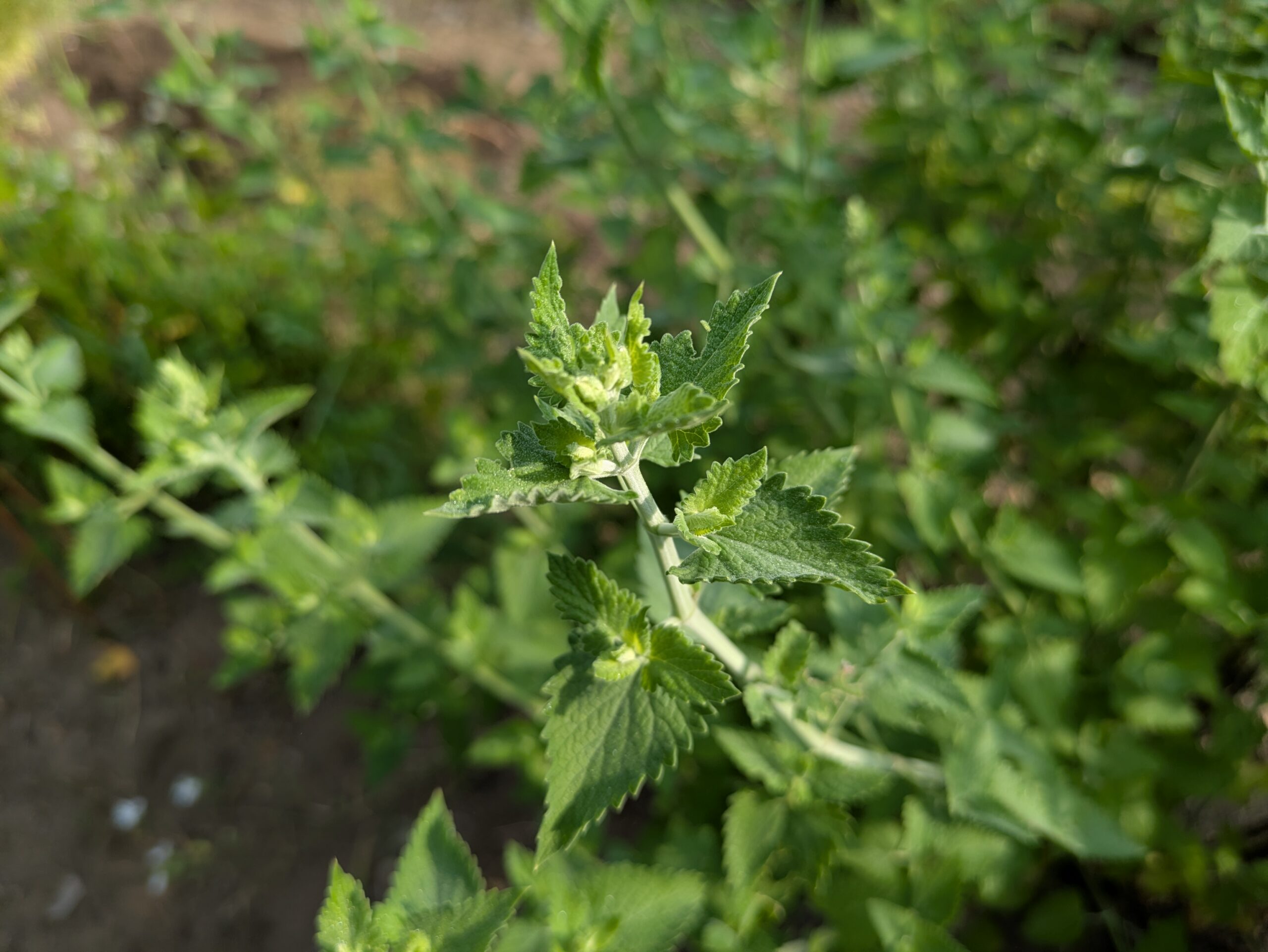
Catnip (Nepeta cataria) is widely known as the stuff that makes your cat go crazy, but it has a long history as a gentle, versatile remedy for humans. And it’s easy to grow!
Plant Snapshot
- Habitat & Family: Native to Eurasia, catnip grows wild and is easily cultivated across North America. It is a hardy member of the mint family (Lamiaceae).
- Energetics: Cooling and drying.
- Parts Used: Aerial parts—specifically the leaves and flowering tops.
- Contraindications: None known.
Helpful Videos:
Catnip vs Catmint (to help you identify the right plant
Can you make tea with your cat’s catnip from the pet store?
Is catnip safe while pregnant?

Catnip is easy to grow from seed, but if you have cats in your yard, I suggest you make a cloche from a cut-off soda bottle to cover the young plants while they’re getting stronger. If you don’t protect them, your cat will likely eat them down to nothing before they have a chance to grow big enough to harvest.
Why Keep Catnip in the Herbal Cabinet?
Catnip shines as a reliable carminative and diaphoretic—making it the ultimate “feeling sick” herb across generations.
- For Digestion: Its carminative properties ease gas, bloating, and abdominal discomfort. It is gentle enough for children and offers welcome relief to mothers experiencing pregnancy-related digestive distress.
- For Fevers & Tension: As a mild diaphoretic, catnip helps the body produce a sweat to release heat during fever, while simultaneously soothing nervous tension or restlessness that accompanies illness.
Catnip works on the digestive system in tea or electuary form but works really well as a nervine or in combination with other herbs to help you calm down in tincture form.
Recipe: “Fartypants” Electuary
An electuary is a simple, traditional blend of powdered herbs and raw honey. This tasty herbal paste makes strong-tasting or aromatic herbs easy to take—especially for children.
Ingredients:
- 2 parts dried catnip leaf powder
- 2 parts fennel seed powder
- 1 part caraway seed powder
- 3 parts raw honey
Instructions:
- Combine the powdered herbs in a small glass jar.
- Pour in the raw honey and stir thoroughly until fully incorporated into a smooth paste.
- Label and store in a cool, dark place.
Dosage: Take 1 teaspoon as needed to settle gas, bloating, or digestive spasms.
Have you ever tried catnip tea for gas problems? If you’re dealing with chronic gas and bloating, you may find relief by following my Gut Healing Protocol.