
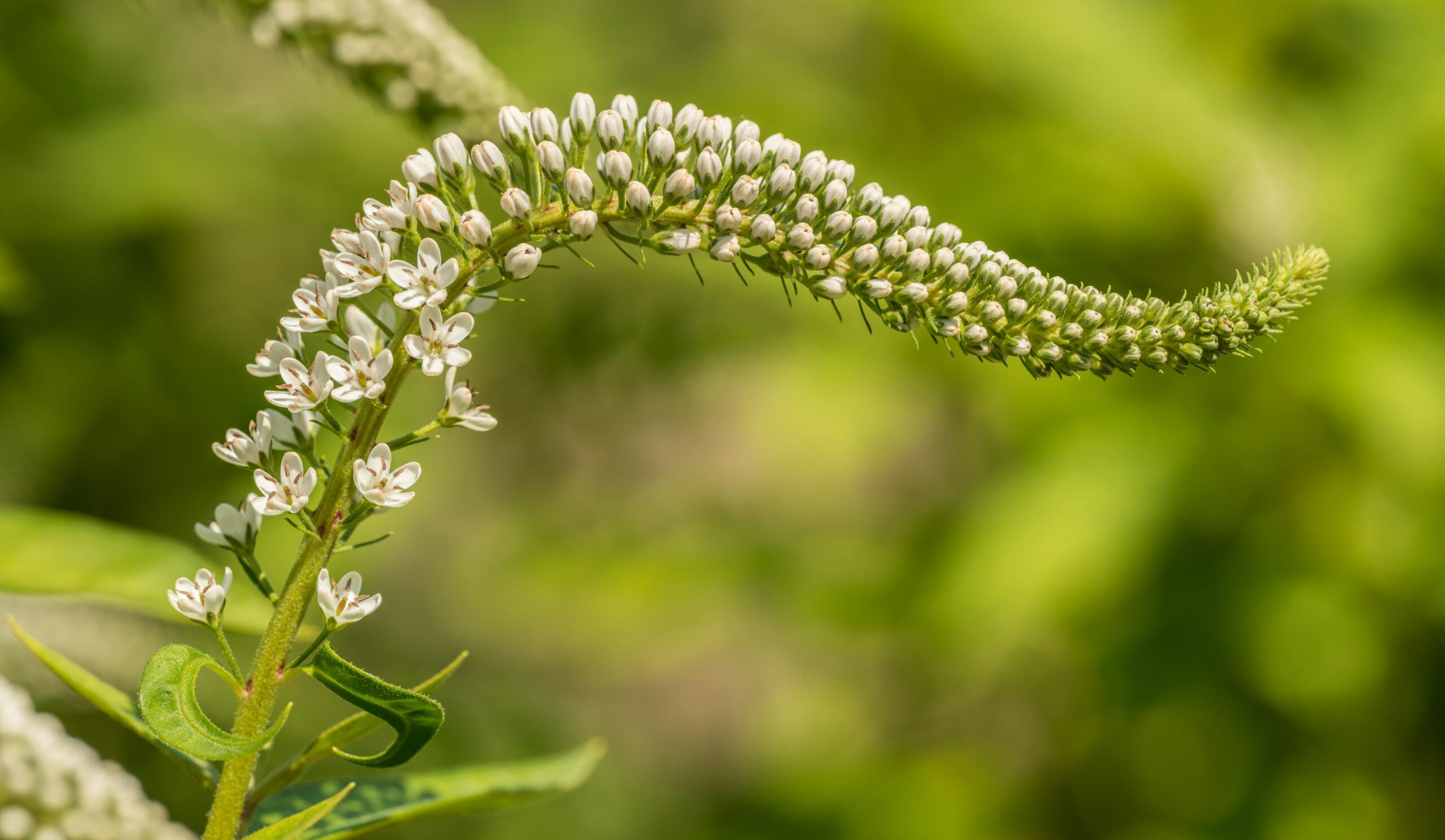
Black cohosh is a gorgeous perennial plant native to North America. You’ll find it under two different Botanical names, depending on the age of the text you look in: Cimicifuga racemosa and Actaea racemosa. I can’t recall which one is the older name but botanists drive me nuts when they do this… Anyway, I used to just recommend it to women of a “certain age” who were getting hot flashes, until I learned a little more about what this herb can really do.
The medicinal part of this is the root, which I usually dig up in autumn because that’s when you’re supposed to dig roots, but sometimes I forget and dig it up in springtime. It will be stronger in fall, but works just fine in early spring.
It prefers dark, loamy soil like that found in a woodland understory, but it’s not hard to grow in your garden as long as you give it some mulch now and then. I find that here in Connecticut, it’s wiser to grow the plant on purpose so you know what and where it is. You do NOT want to accidentally wild harvest White Baneberry.
Note: I am not a doctor and this blog post is not meant to be taken as medical advice. I pulled from many herbal texts to gather this knowledge for you.
What are this herb’s actions?
Black cohosh was once thought to contain phytoestrogens or have an effect on estrogen in a woman’s body, and that’s how it was giving them relief from hot flashes. However, recent research has shown that the main component resolving hot flashes is working on the body’s nervous system. Either way, I have several clients in their late 50s who swear by it.
This herb is a fantastic, and I mean FANTASTIC antispasmodic. That means it helps with pretty much any kind of spasm. Got menstrual cramps? Black cohosh root tincture. Bad cough? Try blending black cohosh root tincture with some Wild Black Cherry bark tincture. It’s even got an affinity for the spasmodic pain associated with a man getting kicked in the balls.

Herb warnings
This herb can cause uterine spasms, so it’s not recommended to be taken by pregnant women EXCEPT if they’re working with a qualified herbalist through the last days of their pregnancy. Black cohosh has been given to women for centuries to help a woman’s body during labor to evict the baby (in a healthy way).
It can also be hard on the stomach (depending on dosage), so avoid giving it to nursing mothers as well. If you take too much you can get an upset tummy. A normal dose is around 30 mL (so one dropper full of tincture.) I find the effects last a good 4-5 hours from that so you shouldn’t have a problem with normal dosing, though if you hot flash, cramp, or whatever is extremely strong you can dose a little higher until you feel relief.
This herb was once given to people for venomous bites and stings, so if you have some on hand after being bitten by a snake, take a dose before you head to the hospital. It might help give you a few extra minutes!
Beware: Do NOT confuse Black Cohosh with Blue Cohosh. That’s a completely different plant with different actions.

How do I take Black Cohosh?
This herb is best administered in tincture form, mainly due to the fact that it tastes god awful. It’s pungent, acrid, and bitter. You can take it as a decoction, but good luck getting it down. It doesn’t seem to work very well as a powder, so don’t waste your money on capsules. Alcohol does a good job pulling out the alkaloid content, particularly from fresh roots.
I almost always prefer to make tinctures with fresh herbs rather than dried. This is partly due to the fact that when they’re fresh, I know exactly when the plant was harvested and how long it will last. I like knowing that I’m making the most potent medicine possible for myself and my clients.
Find out how I make my herbal tinctures here >> Making Tinctures Safely PDF Guide
Even though this herb isn’t acting on your estrogen levels, it’s still considered a powerful “women’s herb” that has helped many get through the ups and downs of perimenopause for generations. It’s definitely worth having this remedy in your personal apothecary!
Learn all about supporting women’s bodies naturally inside Chapter 27 of my book, Think Like an Herbalist