
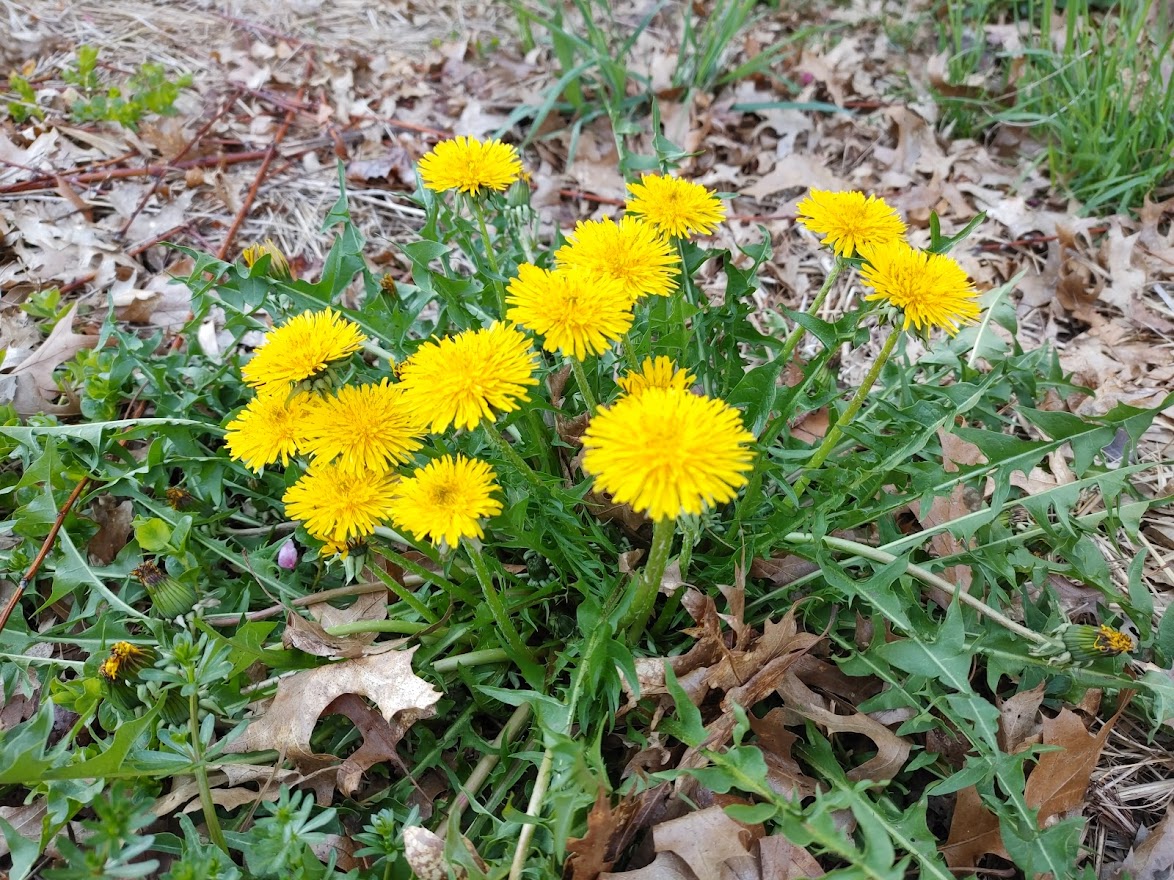
Dandelions (for the purpose of this article I’m referring to Taraxacum officinale, though there are over 400 other varieties) are more than just a sunny weed dotting our lawns—they’re one of the most versatile and healing plants in the wild. Every part of the dandelion (Taraxacum officinale), from flower to root, is edible and medicinal in some way for the body.
Dandelions will grow just about ANYWHERE, but they tend to be larger and tastier in recently-tilled or loose soil. Some of the nicest dandelions I ever found were in a pasture that had had cows in it the previous season.
Dandelions are often found growing in places that make you say “WHY?!”

Dandelions have a long taproot and are bio-accumulators, which means they’re basically nature’s way of cleaning up a toxic waste dump. Have you ever driven by a place where there used to be a building but it was razed down to nothing? Take a look at the soil– I bet it’s covered in dandelions!
Dandelion seeds will come in on the wind and settle in an area of compacted soil. The long taproot digs deep down into the tight, possibly toxic soil and begins to break it up. It also sucks up any toxins that may be there.
So when the dandelion dies down for the winter, even if it survives the toxins are left to die in its above-ground parts while the root has broken up the soil in the area well enough that the seeds of other plants are able to take hold and begin to populate the soil nearby, eventually increasing its diversity. Over time, if left alone, dandelions can help reclaim an old toxic place for Mother Nature.
The intelligence of nature is astounding, isn’t it?
The Whole Plant is Medicine
- Leaves: Rich in minerals like potassium and iron, dandelion leaves are a natural diuretic that support kidney function and help flush excess fluid. They can be an excellent natural replacement for water pills because they support the kidneys naturally while replacing the potassium that the body loses in the process.
- Flowers: High in antioxidants and mildly analgesic, they can be infused into oils, teas, or even used to make dandelion wine or salves for sore muscles. I like to make a dandelion foot balm for winter time because they are also quite moisturizing.
- Roots: A powerful liver tonic, the root supports detoxification and can be roasted for a coffee-like beverage that also nourishes the digestive system. See my Dandelion Root Tea video
Make sure you’re harvesting true dandelions, as there are many lookalikes in the Asteraceae family that look similar. The lookalikes all have a vague affinity for the liver and digestive tract, just like Dandelions, but they are not as tasty and can often be quite unpleasantly bitter. None of them are toxic, they simply don’t taste very good.
The bitter flavor of fresh dandelion root is one of its medicinal highlights! Dandelion root is one of my main go-to herbs when crafting a Digestive Bitters recipe.
How to Harvest and Work with Dandelion
- Always harvest from unsprayed areas—lawns, roadsides, or public parks are often treated with chemicals. You can plant dandelions on purpose in your backyard to make sure they stay chemical-free.
- Young leaves (harvested in early spring before the plant flowers) are less bitter and can be added to salads or tea.
- Roots are best dug in autumn and can be dried, roasted, or decocted into teas.
- Flowers should be harvested fresh and open and either cooked right away (if making food) or dehydrated quickly. I have a special lesson about getting it just right in my Remedies From Nature course.
- Flowers can be made into an energetic medicine known as a Flower Essence and helps relax tension or rigidity in the body as well as brighten your mood.
- Dandelion Wine is a delectable treat that’s a ton of work but worth the effort if you’re a drinker
A Gateway Plant
Dandelions are often one of the first wild plants people recognize and taste. Their unique flavor and inescapable appearance every spring reconnects us with the rhythms of nature and reminds us that healing can be simple, accessible, and right outside our door.
You can get several of my dandelion recipes along with a complete nutritional profile inside my book, Forage and Heal: Discovering Plant Identification, Black Walnuts, and Nature’s Healing Power , available on Amazon.


