
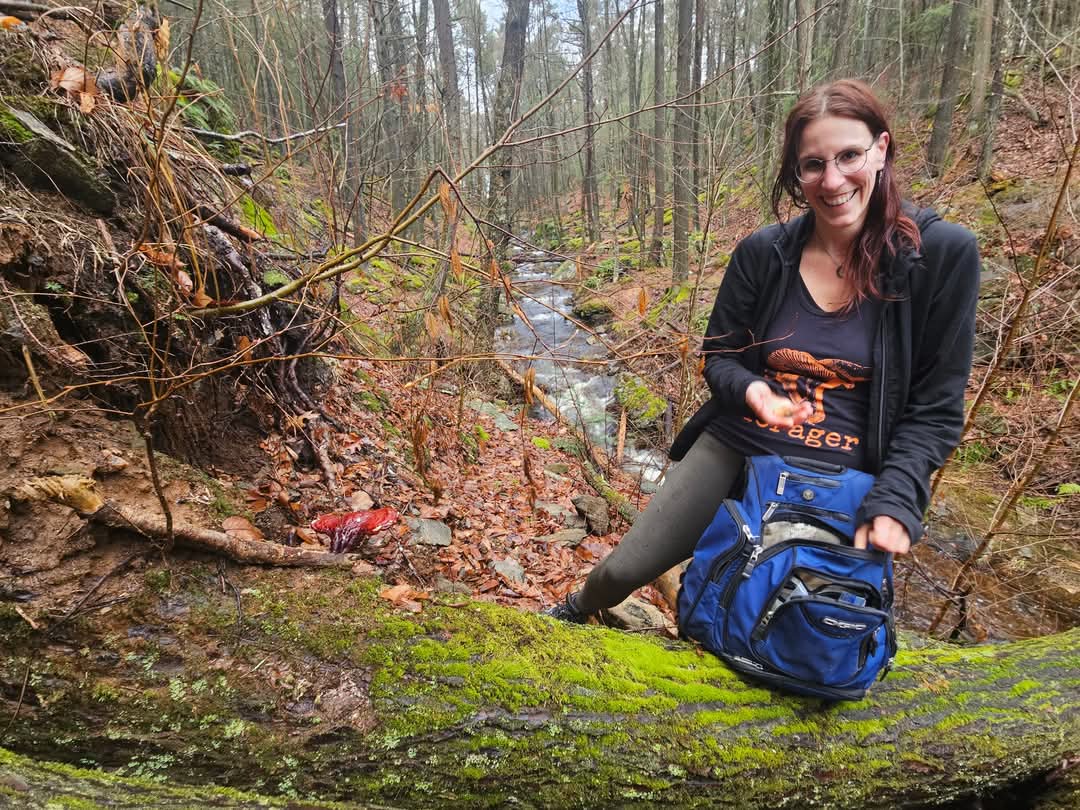
If you’re hoping for some secret, fancy foraging gear… this might disappoint you. Because the truth is, what I use most often is pretty simple, everyday stuff. No magic knife, no special bag—just practical tools that get the job done. That said, as a professional forager, there are a few things I always have on hand. Let me show you what actually earns a spot in my kit.
Top 3: Cutting Implements
One thing you absolutely need to bring with you when you go out hunting for plants, mushrooms, or anything else is a decent knife. I have quite a few pocket knives and a couple of big Buck knives as well, but the one I use most often (I know this is gonna sound lame) is my little Gerber folding knife.

Mine has a 3-inch blade and goes dull all the time, so I have to sharpen it more often, but this thing lives in my pocket year-round. I have little holes in the right side of every pair of leggings I own because of this sticking out and ripping a hole in the pocket. Yes, I hike in leggings (the kind made with cotton or wool with pockets). Makes it easier to see ticks crawling on me.
I also have a fancy little Mushroom Knife but I’m pretty sure I broke it last week when I realized I’d forgotten my regular knife at home and only had this in my pack. I used it as a chisel to harvest some chaga and busted the end of it by banging it with a thick stick. It’s not the sturdiest piece of metal out there but was easier to keep in my bag than a full knife. It was great to have on hand, though and was helpful at cutting the black trumpets and chanterelle patches I find.

Snips: Trust me, especially if you want to harvest bark, you need a good pair of snips in your pack. I have owned several brands and most of them suck. Felco Snips are honestly the best, though the little strap that holds them together is weak as hell. Get a case for them if you need to.
For digging: Nothing beats a Hori-Hori Knife. I have one that I keep in my backpack and one at home for farming. Last year I lost it in the garden and bought another one. Worth every penny. I’ll probably own ten of these before I die. Best digging tool ever!
Other Gear
Of course you need a hiking pack of some kind. The one I use right now is something I bought at Goodwill for $10 like fifteen years ago and it’s beat to hell, so I don’t think I want to show it off. But this one looks pretty good: Army Backpack . To be fair as long as it has multiple pockets and a place to hold a good water bottle or maybe a spot to hang a whistle or some pepper spray, you’ll be good.
For the purpose of avoiding ticks, I wear leggings (either long or capris but always with pockets!) from Pact or Woolx. Sometimes I get another cotton brand online if I can find them. I need pockets… I cannot tell you how many times I’ve come out of the forest with both pockets full of something I had no more room for in my backpack. Also, if you want extra natural tick protection you can dab a little Rose Geranium essential oil on your pants or gear.
If I wear boots they’re usually Xero Shoes hiking boots. But I actually hike barefoot from April through November. I much prefer feeling the earth beneath my feet! It gives me a solid grip on rocks and if I step in mud I can just wash my feet off in a puddle or stream and not have to tromp back to the parking lot in wet nasty shoes.
To carry what I forage for right now I mostly just bring old ziploc baggies or cut the tops off those netted produce bags lemons come in. However, I’m hoping to get a wooden foraging pack later this year. You always want to harvest mushrooms keeping each variety in a separate bag and keep your green things separate from your mushrooms. They make fancy little mesh bags online but honestly a reusable shopping or produce bag works just as well.
Favorite Foraging Books
This is not a list of every book I have, just the ones I feel like I use the most. I have a big shelf of Plant ID books including the classic Stalking the Wild Asparagus signed by Euell Gibbons himself (Thanks again, Uncle Steve!)
The number one book that still to this day has permanent residence in my backpack is Mushrooms of the Northeast. I don’t like to go out into the forest without it because it is way more reliable than the internet or any app.

Sam Thayer’s Guide to Edible Wild Plants is easily the best and most accurate plant identification book I’ve ever seen. You don’t need to lug it into the forest on a deep hike unless you’re going to be gone for a few days but it’s absolutely worth having and maybe keeping in your vehicle. Fair warning: it’s a huge thick book and it set off the bomb alarm at TSA when I brought it on my trip to Ohio two years ago. Thanks a lot, Sam.
You also want to have a Peterson’s Field Guide for whatever region you live in. These are indispensable! And another little one that’s easy to carry with you wherever you go is the Tree Finder book. My copies of these two are beat to shit from living in my backpack.
This is not an exhaustive list of everything I own, but if you have some version of these items available to you, you can get started and be pretty successful foraging.

The one thing you may not have is 20 years of experience finding, properly identifying, and working with wild edible and medicinal plants. Yep, this year officially marks 20 years of my adult life that I’ve been foraging and eating things from the wild!
Perhaps you would like to join me in person sometime? I travel all over the region to teach private Foraging Walks and I am constantly updating my list of upcoming Events where you can join me in learning more about how nature can feed and heal you.
You can also get started by reading my Forage and Heal educational book.
Some of the links in this post are affiliate links. That means if you buy the product through my link, I make a buck or two. This helps both of us! Thank you for your support and understanding.