I have been stressed as hell for months now. Thankfully, I have not experienced any debilitating anxiety. However, I know lots of people who deal with that every day too. I can’t even imagine how tough my life would feel if I was dealing with anxious feelings or panic attacks on top of what I’m already feeling day to day.
I’d like to give you some options to help yourself through either of these problems. I can only tell you how these herbs have worked in my body and how they are supposed to work in your body, though. I can’t promise any of these solutions will be right for you, but I can assure you that they are a much safer option to try than jumping onto pharmaceutical medications.
First, what’s the difference between stress and anxiety?
“People under stress experience mental and physical symptoms, such as irritability, anger, fatigue, muscle pain, digestive troubles, and difficulty sleeping. Anxiety, on the other hand, is defined by persistent, excessive worries that don’t go away even in the absence of a stressor.” American Psychological Association
I’ve had 2 panic attacks in my life (that I can remember) and they both happened before I got my mental health back… so they were the old me, with the old mental programming and hang-ups. That woman died three years ago. The new me, thankfully, doesn’t have anxiety. Sure I worry about things occasionally, but it’s never enough to stop me from living my life and continuing to strive towards what I want in my future.
The new me, running my own business, is stressed as hell though.
Whenever I tell people what I do for a living and explain how it actually works, their jaws drop. I’ve had people shake their heads and wonder how I’m still standing anymore. I usually say something about how I’m sitting while I talk to them, or I’m sitting while I type this. That qualifies partly as rest, right? LOL
Too much stress can cause hair loss, stomach ulcers, reduced ability to sleep, hormone imbalances, and more. According to Paul Bergner (one of my favorite herbal teachers), “Stress inhibits the secretions of stomach acid and other enzymes that are necessary to digest foods and release their mineral content.”
That means that if you’re dealing with too much stress in your life and not doing anything to mitigate it, your body may not actually be able to absorb the nutrition from your food!
There’s so much I could go into about gut health here, but I’ll stick to the topic and get into the herbal remedies. You can always get started healing your gut with my Gut Healing Protocol.
I have been asked by several clients how they can wean themselves off their anxiety or depression medications. That depends on a lot of factors, really: how long they’ve been on the meds, how much are they taking, what type of meds, their lifestyle, and their dedication to changing or resolving their problems. The first step to weaning off your medication is to talk with the doctor who prescribed it to you and ask them the best steps.
There are herbs that can help you, but in most cases they aren’t going to affect your body and mood as drastically as a pharmaceutical does. That’s why it’s critical that you slowly wean off the medication while also testing herbal remedies and other methods that can help you deal with your problems.
If you have SEVERE anxiety or depression, I suggest you speak with a physician. Herbs may not be your best choice until you get the problem under control.
That said, I can tell you that because I personally have never felt the kind of heart-stopping, breath-catching chronic anxiety that you may have, I can only tell you about these herbs from an educational perspective rather than my own experience. I have worked with herbs to manage my stress levels though.
The herbal category you want to look for in this case is called “Nervines.” Nervines have an effect on your nervous system and they come in various strengths, with varying affinities for anxiety or restlessness. And remember, each herb has many different medicinal constituents inside it that can affect more than just your nervous system. Please do more in-depth research on any herb before you start taking it medicinally.
Passionflower (Passiflora incarnata)- a relaxing nervine that can help quiet the mind if you have racing thoughts preventing you from falling asleep. VERY safe herb for adults and children alike. Doesn’t really work for me in particular, but it tastes nice. I add this to my sleepy teas and tinctures.
Lemon Balm (Melissa officinalis)- helpful for general anxiety, nervousness that affects the heart, eases sadness and depression, calming and helps sleep. I also add this to thyroid and uterus support blends. It smells like Lemon, tastes mildly lemony, and grows with insane abundance on my farm. I should probably take it more often but I’m too busy weeding it out of the garden beds to make me love it as much as I should.
Lavender (Lavandula officinalis)- relaxing nervine for tension and anxiety. Lifts your mood and can be mildly antidepressant. Especially helps high-strung, nervous people. Can help you or a child fall asleep. I personally have no idea why I grow so much lavender on my farm because I rarely work with it. Too much in a tea blend is off-putting, I don’t make cookies enough to need it for that, and I personally feel its scent is too strong to help me sleep (but I’m sensitive to scents.) For some people, it works amazingly well, and I admit adding a dab of lavender oil to the bottom of my kids’ feet helped them fall asleep when they were little.
Motherwort (Leonurus cardiaca)- This is a very strong nervine that can especially help you if you have anxiety or stress related to your mother (no, I’m serious). This herb drops your blood pressure quickly! It’s not meant to be taken in place of blood pressure medication, but it can potentially be part of a natural treatment plan for that fact. The first time I took this I didn’t realize how drastic the effect would be. I naturally have low blood pressure; taking a half dropperful of this tincture made me feel like I was sinking into a big fluffy feather bed and not want to get up. Use caution before you start adding it to your regime, especially with blood pressure issues. Most blood pressure problems can be helped with a holistic approach that includes a lot more than just motherwort tincture. If you want help, a Consultation is in order!
Let’s move into some herbs that can help with Stress too…
Skullcap (Scutellaria lateriflora)- A relaxing nervine that can help chronic insomnia or stress. The person who needs skullcap often has inability to pay attention or are overly sensitive to any sound or stimulation in the outside world. I’m so upset that the seeds didn’t grow for me this year. I LOVE this herb! Taking a dose of skullcap tincture is akin to you feeling like a lit candle that is being snuffed out. I only have a tiny bit left from last year’s harvest so I’m not sharing. But you can get some from Mountain Rose Herbs if you need to try it.
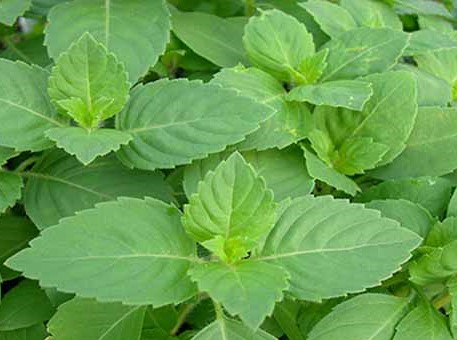
Tulsi / Holy Basil (Ocimum sanctum)- This is probably my favorite herb when it comes to relaxing tension, stress, and anxiety. I’m annoyed at myself that I didn’t harvest as much as I could have this season simply since the summer got away from me. Tulsi protects the heart from stress, lowers blood pressure and cholesterol levels, and can help stabilize blood sugar levels. This herb increases joy and happiness and induces a feeling that all will be alright.
Honorable Mention Herbs I also love:
Linden (Tilia americana)- excellent as a tea for kids and adults! A great cardioprotective nervine.
Milky Oats (Avena sativa)- oats harvested at a specific milky stage. This is a great daily stress tonic.
Evening Primrose (Oenothera biennis)- a pernicious weed that actually calms you down and moistens dry tissues as well.
Other methods I utilize for Stress Relief
I’ve written before about how I will often have a cup of tea when I’m stressed out, and that more often than not it’s just a cup of organic black tea with stevia and a little goat milk added. This works for me partly because I’ve been drinking tea this way since I was like 5 years old thanks to my tea-addicted mother and partly because black tea contains L-theanine, which elevates your mood, boosts mental focus, and encourages relaxation. Green tea is higher in L-theanine, but when I’m wicked stressed out, I just want the comforts of my childhood and a good movie on while I crochet.
I started taking this supplement a few months ago, made with saffron (a powerful stress support herb) and it really does help: Stress Relief
I frequently utilize EFT (the Emotional Freedom Technique, or Tapping) to deal with feelings of worry or stress. Nick Ortner, Brad Yates, and many other practitioners are available to help you on YouTube for free.
And two of the best ways to reduce stress naturally are absolutely free: standing or walking barefoot on the ground (preferably grass or some other cushy groundcover) and cuddling with a loved one or pet. These two activities increase dopamine and oxytocin levels in your body and are better than any drug you could take.
Nothing beats snuggles with my boy!
Stress, anxiety, depression, brain fog… these are all symptoms that can be alleviated by properly identifying and addressing the underlying problem. But how do you find out what that is?
The keys to deducing your problem involve understanding how your body and mind work. Herbs are only part of the answer. If you’re looking to dive deep into resolving the root causes of your anxiety or depression, my mental health memoir Uncovering Amy will get you started on the same path I took to recover my own mental health once and for all.
Please note that some of the links in the above article are affiliate links and if you purchase through them I may receive a small commission at no extra cost to you. Thanks!