
Disclaimer: This is not medical advice. I’m an Herbalist, not a Doctor.
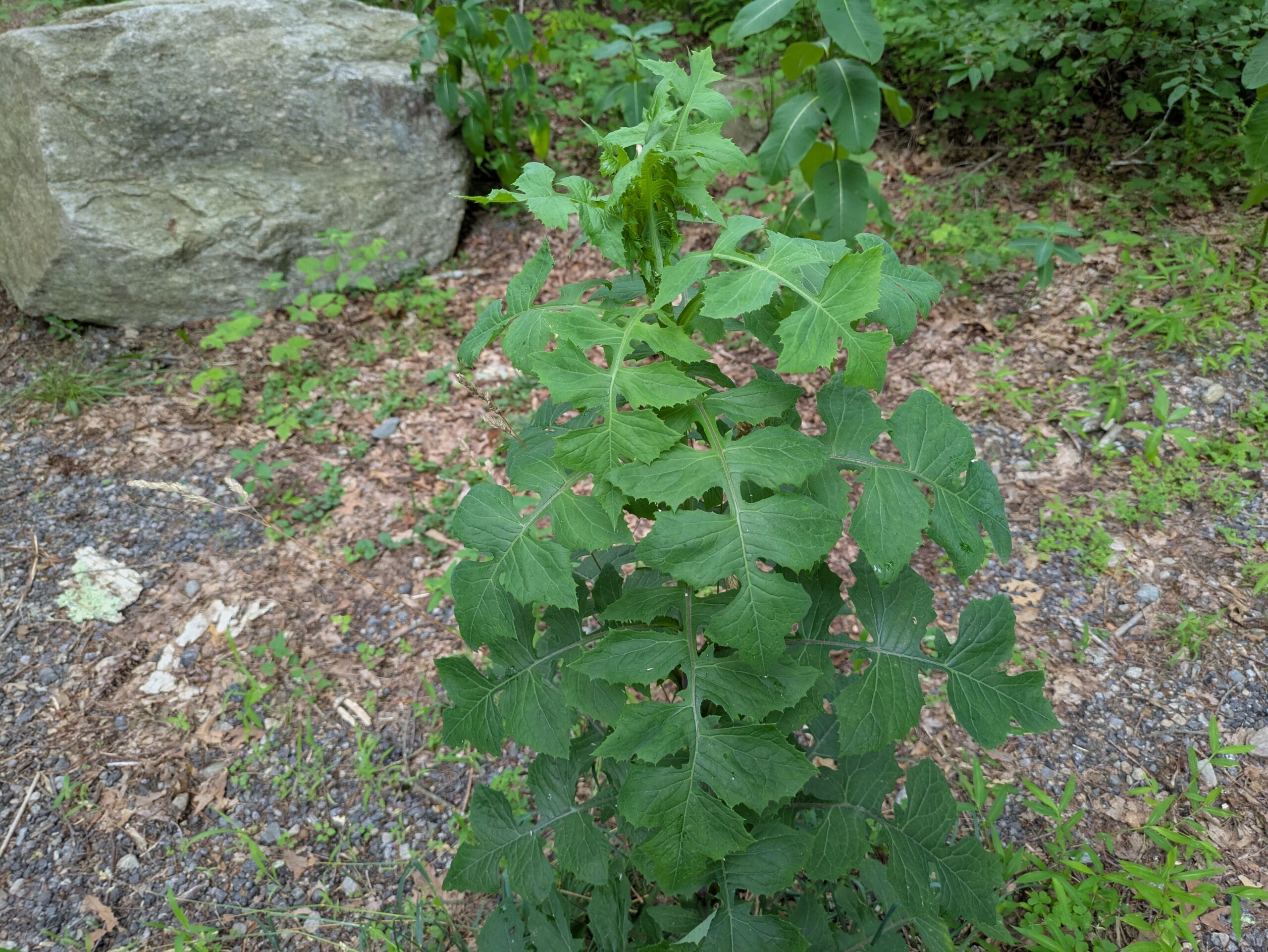
Wild Lettuce (Lactuca spp.) quickly became one of my top favorite herbal remedies as soon as I was confident enough to recognize it and try it. Why? Because it is hands-down the strongest natural painkiller I’ve ever experienced.
Traditionally speaking, this plant has two main herbal actions: as a digestive bitter and a hypnotic nervine (meaning it helps you fall asleep and calm down). However, it is specific* for helping people who are in so much physical pain that they are unable to fall asleep.
*In herbalism, the term “specific” refers to a herb or herbal remedy chosen for its direct and targeted action on a particular symptom or disease. While many modern approaches emphasize a broader “whole-systems” perspective, the “specific” approach matches a particular herb to a specific ailment, such as using valerian for sleep problems.

This plant is in the Asteraceae family (the same plant family as dandelions and chamomile) so should be avoided by anyone with an allergic reaction to those plants. It’s easy to tell the family resemblance when you look at the flowers and seed heads, however.
There are at least 12 species of Lactuca distributed across North America. I usually find Lactuca canadensis, Lactuca biennis, or Lactuca virosa around here. But many people in my social media audience tell me they frequently find Lactuca serriola, or Prickly lettuce near their area.
All of these may be worked with interchangeably as far as making herbal medicine, but I can tell you from experience that canadensis and biennis are the only ones that actually taste decent as a food (usually at a young stage of growth prior to flowering.) You can eat the young leaves as part of a salad or just straight off the plant and they’ll add a slightly bitter flavor to your meal, much akin to dandelion greens.
The bitter flavor is actually quite beneficial, as it gets your digestive enzymes flowing and encourages your liver to produce bile, which is then released by your gallbladder into your digestive tract. This helps you digest the fatty parts of the rest of your meal and is the basis for why we eat a salad at the beginning of the meal when we go out to eat or have a big family dinner.

As far as making herbal medicine with this plant, there are several ways you can do it. The medicinal component you’re looking for is called Lactucarium, the milky-white substance that drips from a freshly cut leaf or stem. This is related to latex so use caution if trying this plant for the first time when you have a latex allergy. I personally have a latex allergy but I can take the tincture of this plant without issue.
I prefer to harvest the aerial parts of this plant prior to it setting out flowers but it’s still okay to work with when it is in flower. Once the flower heads have gone to seed and the plant is dying back, however, you have missed your chance. Just save some seeds to plant for next year.
Some people have suggested that you cut the plant over and over, squeezing out the lactucarium drop by drop and making your medicine with that. I’m way too busy (and lazy) to do all that work! So I chop up the whole plant fresh.
If you’re worried about making sure the plant is able to produce seeds so you’ll have some to forage next year, watch my video: How to Harvest Wild Lettuce Sustainably
Feral Foraging has a good video that shows you how to make a wild lettuce “Tar” substance that you can take directly: WATCH HERE But this is not my personally preferred method, mostly because it takes many hours of boiling and quite honestly

My preferred method is to make a strong tincture with the plant, which I teach you exactly how to make inside my Making Tinctures Safely and Effectively PDF and in even more detail (with video lessons) inside my Remedies From Nature online herbal medicine making course. You can also just buy some of my tincture directly in my Online Shop.

My Wild Lettuce tincture is my personal go-to for when I have seriously hurt myself (strained my back, broken a bone, etc.) because it offers systemic pain relief across my entire body. I always grab my Birch Oil to apply topically for targeted pain relief (like arthritis in one certain joint or if only one of my hips is aching) but if I am really hurting, wild lettuce it is.
>>Wild Lettuce is briefly featured inside my book, Forage and Heal
Caution: As with any new remedy, when you take this plant internally for the first time you should start with a small dose (like one dropper full) and see what happens in your body. If you feel itchy or your throat swells up, you’re allergic to it. Get to a doctor or find your epi-pen. This is unlikely, but I just want you to be safe when trying new remedies.
If you’re not concerned with an allergy, then do what I do: start with 2 droppers full and see if that does the job, and if you need more take it. I usually find about 1/3 of a shot glass worth stops my pain just fine. And while I personally don’t experience the hypnotic (sleep-inducing) affects of this remedy when I take it, my general advice is for you to wait until after you are home for the day or done working for the day before you try it, because it absolutely CAN make you sleepy enough to pass out on the sofa for awhile. Do not take wild lettuce and then drive your car: you’re asking for trouble!
How do you like working with Wild Lettuce? Tell me in the Comments!