
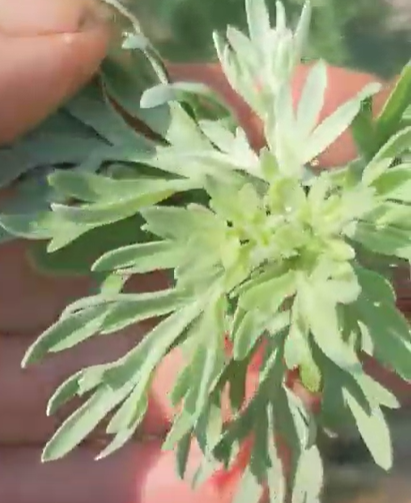
Wormwood (Artemisia absinthium) is a perennial herb with a long and fascinating history. Known for its distinctive bitter taste, it has been used for centuries in traditional medicine and culinary practices across various cultures.
I have two big wormwood bushes in my yard that come back every year and I’m trying to grow more this season. I love working with wormwood, partly because if its silvery, soft appearance and partly because I love the way it smells in incense.
It can be difficult to tell the difference among Wormwood, Mugwort (Artemisia vulgaris), and ragweed (Ambrosia artemisiifolia), because they all share a similar feathery appearance, and it makes sense; all three of these plants are in the Asteraceae family.
Spiritually, Wormwood is burned to help create or enhance a psychic connection with the dead. I add it to most of the smudge bundles that I make and sell around Samhain (Halloween) for this purpose.
Medicinally, I mainly work with wormwood for its vermifuge properties. Wormwood is a powerful antiparasitic herb and can help expel tapeworms as well as other intestinal parasites. Its bitter flavor also pairs nicely in a Digestive Bitters recipe.
It’s a key ingredient in my Parasite Vermifuge Tincture, along with raw garlic, fresh green black walnut hulls, and cloves. Having all four of those herbs in the same tincture helps assure that each stage (egg, larvae, adult) of the parasites are expelled.
Please remember though, that not everyone has parasites. Parasites have been called the villain and cause of every disease known to man over the last couple of years– the latest scapegoat fad to cure all your problems. While there has been some promise in the studies showing that the popular antiparasitic drug Ivermectin can help treat various types of cancer, that does not mean that cancer is caused by parasites. It means that the drug has other properties that allow it to be effective against cancer.
A Bit of Botany:
- Appearance: Wormwood is a tall, erect plant that can grow up to 6 feet high. It has silvery-green, deeply lobed leaves and small, yellow flowers that bloom in late summer.
- Habitat: This adaptable plant thrives in a variety of environments, including roadsides, wastelands, and disturbed areas.
Traditional Culinary Uses: While its bitterness limits its direct use in many dishes, wormwood is a key ingredient in some classic beverages.
- Absinthe: This controversial spirit derives its distinctive flavor and psychoactive effects from wormwood.
- Vermouth: Wormwood is one of the primary botanicals used in this fortified wine.
Cautions:
- Toxicity: Wormwood contains thujone, a compound that can be toxic in high doses. Consuming large amounts of wormwood can lead to serious side effects, including seizures and liver damage.
- Pregnancy and Breastfeeding: Pregnant and breastfeeding women should avoid wormwood entirely due to its potential risks.
Growing Wormwood:
- Sunlight: Wormwood prefers full sun.
- Soil: It can tolerate a variety of soil types but thrives in well-drained (crappy) soil. I have found seedlings popping up randomly in my sandy backyard.
- Propagation: It can be propagated from seeds or by dividing established plants. Beware: it takes a lot of seeds to get a few plants! It hasn’t got a very high germination rate.

If you’re looking to purchase some dried wormwood for your medicine making ventures, I suggest you check Mountain Rose Herbs first. I usually order from them whenever I need something that I have been unable to grow or forage myself.
If you’re intrigued by the potent properties of wormwood and want to learn how to create your own sacred incense with this and other found plants, join my online class Raw Incense: How to Make Incense from Found Plants.
Disclaimer: This information is for educational purposes only and should not be considered medical advice. There may be an affiliate link in the above text that will get me a small commission at no extra cost to you.