
If you’re already a seasoned herbalist, you can keep scrolling by, but if you’re new to herbal medicine, you might want to linger on this post for a few minutes. You hear me talking about tinctures, teas, salves, and more, but you’re not sure which one does what or which thing you actually need. Let this be an easy guide you can follow to help it all make sense!
This is not a list of every single herbal preparation that’s ever been created in history, but it is a list of the ones I create and work with most frequently.
Pro Tip: Everything is a magic potion if you try hard enough

Tincture– herbs macerated (soaked and infused) in alcohol. All tinctures are made with alcohol. Alcohol extracts essential oils, resins, alkaloids, polyphenols, and terpenoids from plant material. 80-proof vodka is the general choice for most herbal tincture extractions, though you can get more specific about what alcohol you need inside my Making Tinctures Safely Guide. Tinctures can last up to 6 years if stored in an airtight jar. Tinctures are great for super-fast absorption of herbs and for people who don’t have a lot of time to prepare their herbs. Tinctures are best taken under the tongue so they can be absorbed directly into the body through your mucous membranes, though you can also add your drops to juice or water if necessary.
Glycerite– herbs macerated in vegetable glycerine. Glycerine does not extract as many medicinal constituents as alcohol, but can be a good alternative for those avoiding alcohol for whatever reason and for dosing small children. Glycerites tend to be a good choice for extracting volatile oils from plants. Be careful where you source your glycerine from, as much of what’s on the market is made from unsustainable palm oil. Glycerites last 1-2 years when stored properly. The process for making glycerites is the same as for making tinctures, but you cannot use glycerine to extract mushrooms. Glycerites are great for kids and a good alternative to tinctures for those recovering from alcohol addiction.
Infusion– also called a “Tisane” or sometimes referred to as Tea. Technically, “tea” is only the Camelia sinensis plant, which is where black tea, white tea, and green tea come from. Anything made with herbs is an Infusion. Infusions are herbs that are extracted with water, the “universal solvent.” Herbal infusions are great at extracting water-soluble compounds like mucilage, tannins, and saponins. Infusions are ideal for certain herbs (like marshmallow root, which only extracts in cold water) and for anyone who has the time to let their herbs sit and steep a while. Infusions tend to be more helpful for gut-related problems than tinctures, since they can get through the entire intestinal tract to deliver their medicinal properties.
Decoction– much like an infusion, this is when herbs are extracted in water that is simmered over low heat. However, this is reserved for the “harder” herbs such as roots, bark, seeds, and mushrooms. I usually decoct herbs for a minimum of 30 minutes, but several hours can be beneficial in some cases. You can also use this method to make an herbal “broth” with some vegetables or meat.
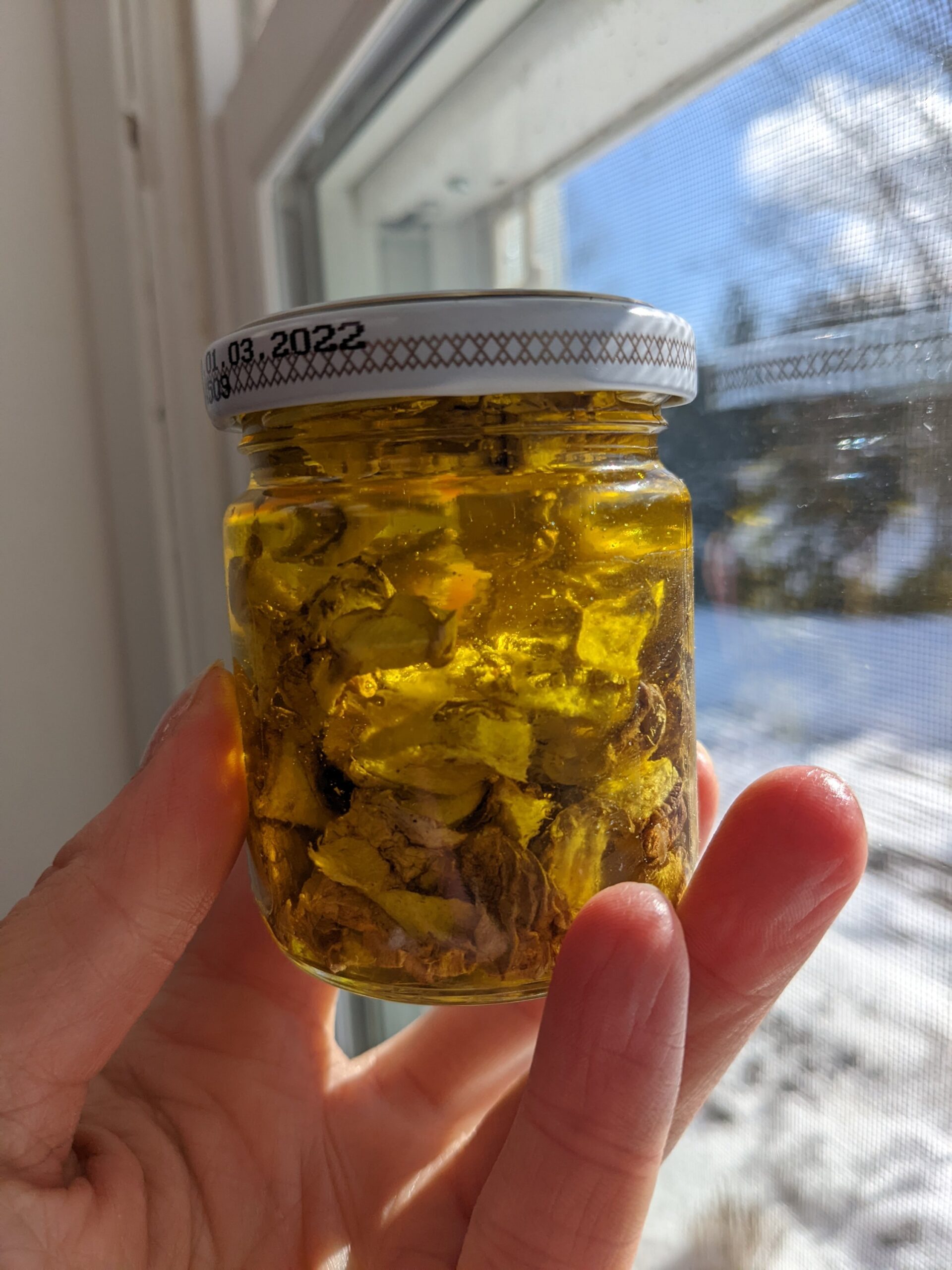
Oil– herbs macerated in a carrier oil such as olive or almond oil. Most oil preparations are intended for topical application, whether used straight or combined with other ingredients to make a salve. A few oils, such as oil of oregano, are crafted for internal use. The safest default when you see an herbal oil is to assume it’s meant to be used on your skin.
Infused Vinegar– exactly like it sounds, this is when herbs are infused in vinegar. Vinegar extracts minerals and vitamins very well, so this is an excellent preparation to choose when dealing with nutritive herbs such as stinging nettle, oat straw, alfalfa, or horsetail. Vinegars can be used in cooking, salad dressing, a hair rinse, or simply taken by the dose as is. Fire Cider is a popular infused vinegar preparation.
Oxymel– this is herbs that are infused with a combination of vinegar and honey. Vinegar extracts vitamins and minerals while honey extracts water-soluble compounds the same way an infusion does. This extraction method makes a pleasant syrupy drink that can be a great way to get kids to take their herbs.
Capsule– dried and powdered herbs put into gelatin capsules to be swallowed.
Electuary– herbs that are ground into a powder and blended with honey (preferably local raw honey) to make a syrupy paste. This is a great option for kids or for anyone who needs to make a concoction that will help them get yucky-tasting herbs down without extracting them in alcohol. Mountain Rose Herbs has a great post on making Electuaries. You can also infuse chopped herbs into honey to make a simple infused honey. Another excellent method to offer kids.
Syrup– herbs that are cooked down in a decoction and later combined with a sweetener such as honey or sugar. This is usually shelf-stable to a point but is safest kept in the refrigerator for up to six months. See my Herbal Cough Syrup recipe. Syrups are fantastic for things like elderberry, rose hips, or ginger.
Flower Essence– energetic preparation made with any flower. The energy of the plant is solar-infused in clear water and preserved, creating drops that affect a person’s emotional and mental state based on the individual flower. Learn more about these from the Flower Essence Society.
Poultice– fresh herbs that are mashed (or chewed) up and applied either directly to the skin or in a piece of gauze which will touch the skin. This is the fastest way to work with an herb medicinally, especially great for emergency situations. You can also prepare some dried herbs to have on hand that can be blended with water and made into a poultice as part of your emergency kit.
Salve– a salve is any herb-infused oil or combination of oils mixed with beeswax or a vegan wax alternative to make a solid preparation that can be applied topically (like my popular Injury Salve.) Salves are a great option if you want to carry the benefits of an herb-infused oil without the risk of spilling it all over your bag, car, pocket, etc. Excellent topical remedy that you can bring with you.

I’m sure you can get an old herbal book and find other types of extractions and concoctions, but these are the most common ones I know of and use. There are recipes for some of my favorite preparations inside my Think Like an Herbalist book and Wildcrafted Eats cookbook.
I have been making herbal remedies for over 15 years and there are still new things to learn every day as well as new preparations I want to experiment with. You can learn how I make ALL of my medicinal concoctions as well as my favorite herbs and some amazing bonus lessons inside my Remedies From Nature online course.